Famous mosques and holy places
The holy places of Islam, great mosques and historic Islamic sites around the world: a short history of each, with a photo and prayer times for the city it stands in.
The holy places of Islam, great mosques and historic Islamic sites around the world: a short history of each, with a photo and prayer times for the city it stands in.
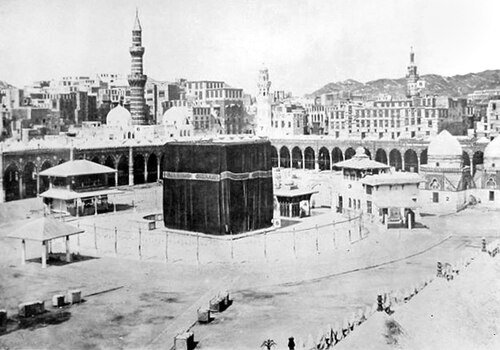
Holy site
Masjid al-Haram in Makkah is the holiest mosque in Islam and surrounds the Kaaba. It is the largest mosque in the world and the destination of the Hajj and Umrah pilgrimages.
Photo: Unknown authorUnknown author On the basis of date, it could be Muhammad Sadiq Be, Public domain · Wikipedia
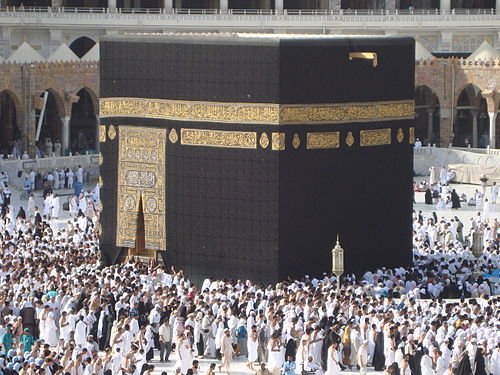
Holy site
The Kaaba is the cube-shaped building at the centre of Masjid al-Haram in Makkah. Muslims everywhere face it in prayer: it sets the qibla direction.
Photo: Aiman titi, CC BY-SA 3.0 · Wikipedia
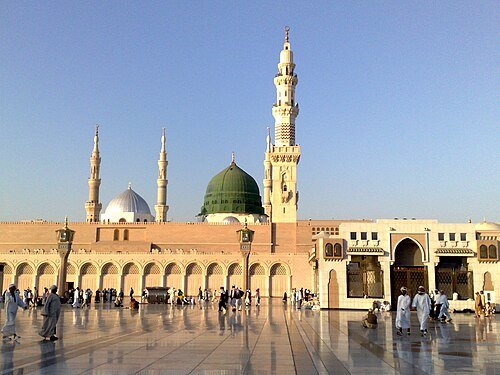
Holy site
Al-Masjid an-Nabawi in Madinah was built by the Prophet Muhammad ﷺ, and he rests beneath its Green Dome. It is the second holiest mosque in Islam.
Built 622
Photo: Bluemangoa2z at Malayalam Wikipedia, Public domain · Wikipedia
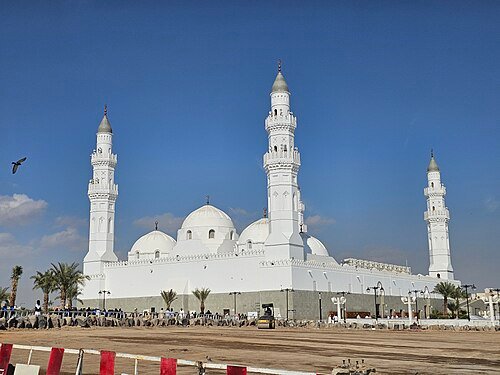
Holy site
Quba Mosque in Madinah is regarded as the first mosque in Islam, founded when the Prophet ﷺ arrived during the Hijrah. Its first stone is said to have been laid by the Prophet himself.
Built 622
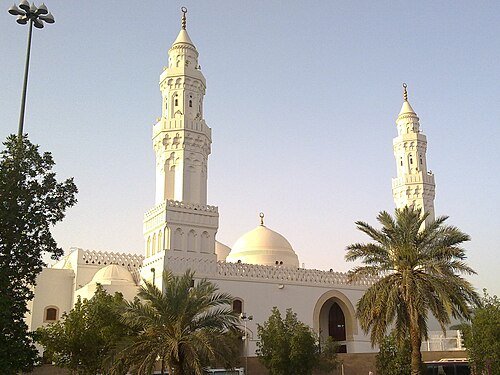
Holy site
Masjid al-Qiblatayn, the Mosque of the Two Qiblas, stands about 5 km north-west of the Prophet’s Mosque in Madinah. Tradition holds that the command to turn the qibla from Jerusalem to Makkah came during a prayer here.
Photo: Aiman titi, CC BY-SA 3.0 · Wikipedia
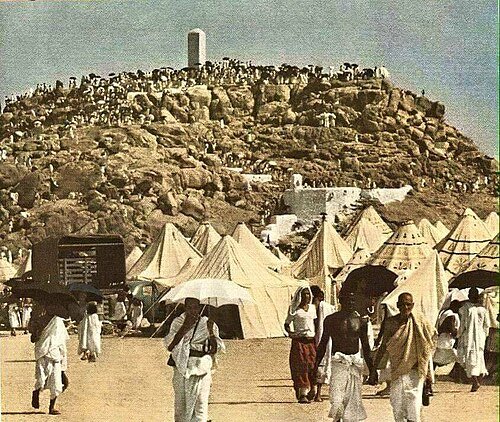
Holy site
Mount Arafat is a granite hill about 20 km south-east of Makkah. Standing at Arafat on the 9th of Dhul Hijjah is the central rite of the Hajj, and the Prophet ﷺ gave his Farewell Sermon here.
Photo: Unknown authorUnknown author, Public domain · Wikipedia
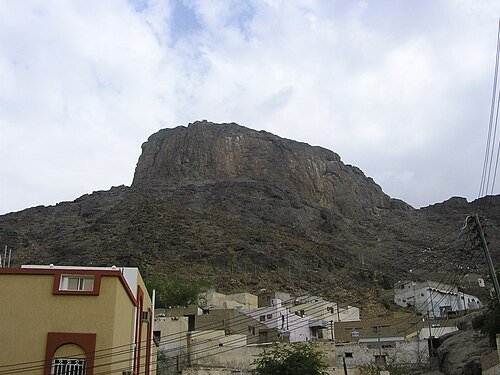
Holy site
Jabal al-Nour, the Mountain of Light, rises near Makkah and holds the Cave of Hira. Here the Prophet ﷺ received the first verses of the Quran, the opening of Surah Al-Alaq.
Photo: Adiput (talk), Public domain · Wikipedia
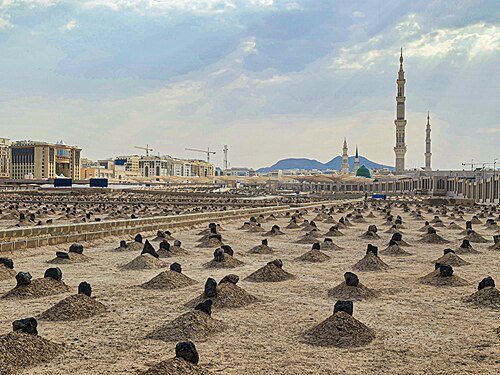
Holy site
Jannat al-Baqi is the oldest Islamic cemetery in Madinah, south-east of the Prophet’s Mosque. Many members of the Prophet’s family and many of his companions are buried here.
Photo: Saleh Al Hussain, CC BY 4.0 · Wikipedia
Holy site
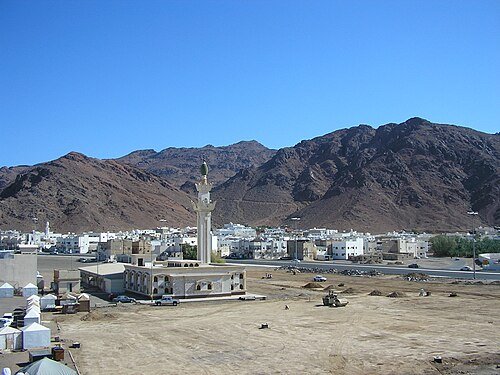
Mount Uhud is a mountain north of Madinah, about 1,077 metres high. The Battle of Uhud was fought at its foot in 625 CE, and the martyrs of Uhud are buried nearby.
Photo: Adiput (talk), Public domain · Wikipedia
Holy site
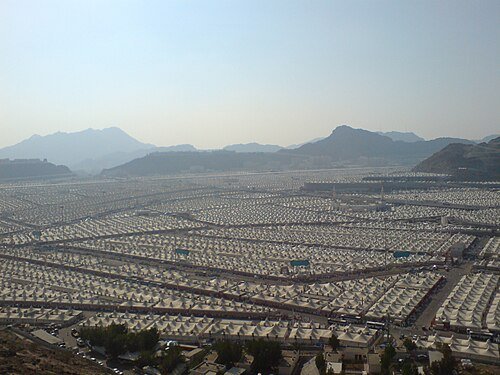
Mina, the City of Tents, is a valley about 8 km south-east of Makkah. Pilgrims stay here during the Hajj and perform the stoning of the Jamarat.
Photo: Mubeen Rahman, CC BY 3.0 · Wikipedia
Holy site
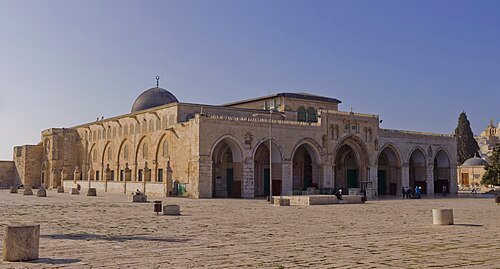
Al-Aqsa in the Old City of Jerusalem is the third holiest site in Islam. It was the first qibla of the Muslims and is linked to the Prophet’s Night Journey, the Isra and Mi’raj.
Holy site
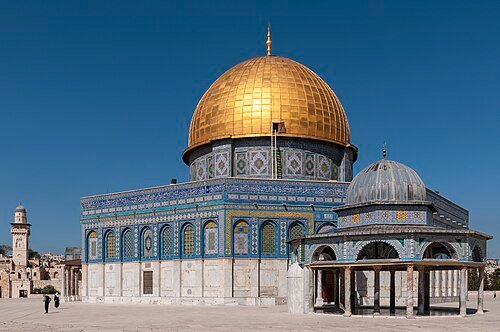
The Dome of the Rock stands at the centre of the Al-Aqsa compound in Jerusalem. Completed in 691 CE, it is the oldest surviving work of Islamic architecture.
Built 691
Photo: Ralf Roletschek, GFDL 1.2 · Wikipedia
Holy site
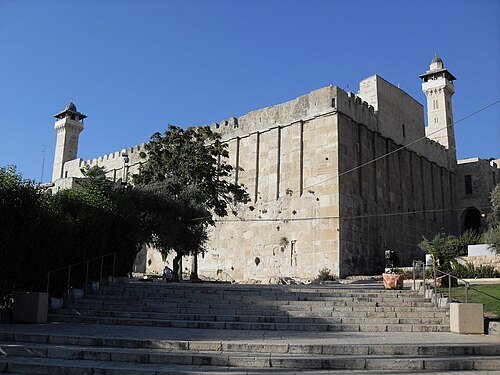
The Ibrahimi Mosque in the Old City of Hebron (Al-Khalil) is built over the Cave of the Patriarchs. Muslims revere it as the burial place of the Prophet Ibrahim.
Photo: Utilisateur:Djampa - User:Djampa, CC BY-SA 4.0 · Wikipedia

Mosque
Sheikh Zayed Grand Mosque in Abu Dhabi is the largest mosque in the United Arab Emirates. Opened in 2007, its white marble domes are among the country’s best-known sights.
Built 2007
Photo: PotatoWitch, CC BY-SA 4.0 · Wikipedia
Mosque
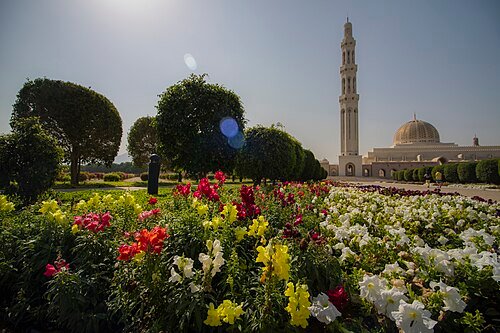
Sultan Qaboos Grand Mosque in Muscat is the largest mosque in Oman. Completed in 2001, it can hold about 20,000 worshippers.
Built 2001Capacity 20,000 worshippers
Photo: Mostafameraji, CC BY-SA 4.0 · Wikipedia
Mosque
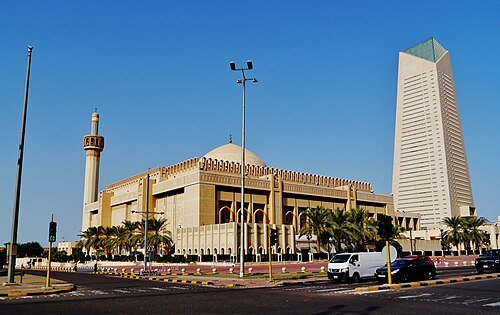
The Grand Mosque in Kuwait City is the largest mosque in Kuwait. Its main prayer hall is 72 metres wide on every side and is lit by 144 windows.
Built 1986
Mosque
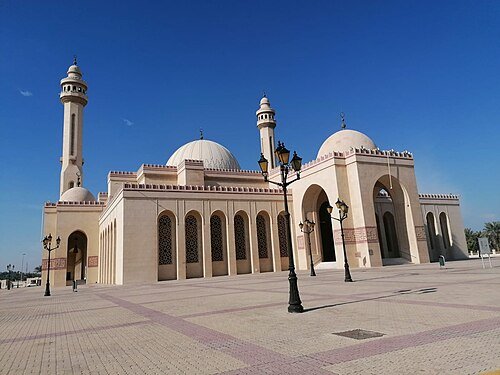
Al Fateh Grand Mosque in Manama is one of the largest mosques in Bahrain. Built in 1987, it can hold more than 7,000 worshippers.
Built 1987Capacity 7,000 worshippers
Photo: أبو الشاي حليب, CC BY-SA 4.0 · Wikipedia
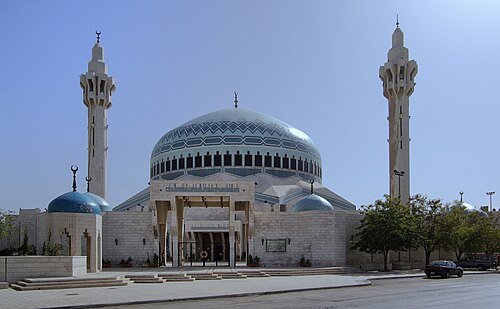
Mosque
King Abdullah I Mosque in Amman was built between 1982 and 1989. Its blue mosaic dome covers a prayer hall for about 3,000 worshippers.
Built 1989
Photo: Berthold Werner, CC BY 3.0 · Wikipedia
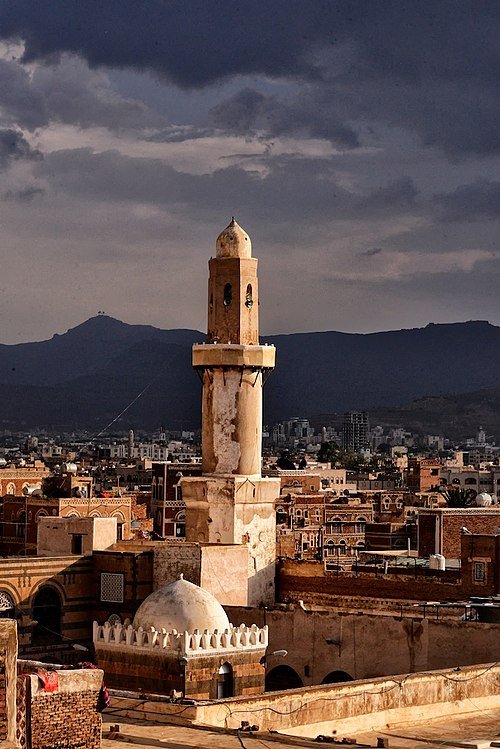
Historic site
The Great Mosque of Sana’a in Yemen is one of the oldest mosques in the world. It is said to date from the early years of Islam, with renovations recorded in the early 8th century.
Photo: Rod Waddington from Kergunyah, Australia, CC BY-SA 2.0 · Wikipedia
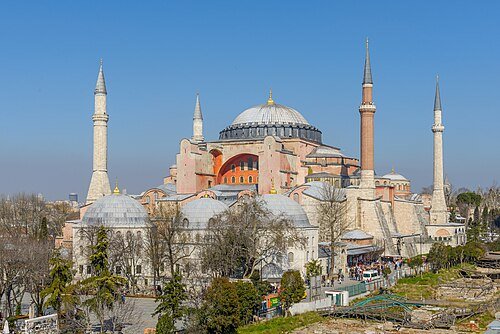
Historic site
Hagia Sophia in Istanbul was completed in 537 as a church and became a mosque in 1453. After 85 years as a museum it was reopened as a mosque in 2020.
Built 537
Photo: Arild Vågen, CC BY-SA 3.0 · Wikipedia
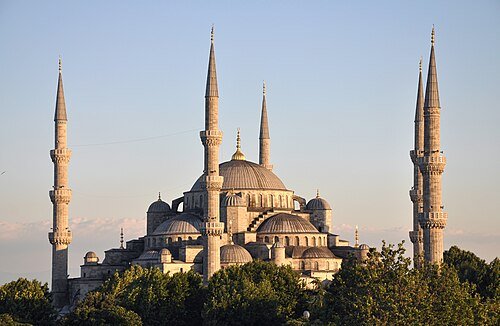
Mosque
The Sultan Ahmed Mosque, known as the Blue Mosque, was built in Istanbul between 1609 and 1617. It is one of the most famous works of Ottoman architecture.
Built 1617Capacity 10,000 worshippers
Mosque
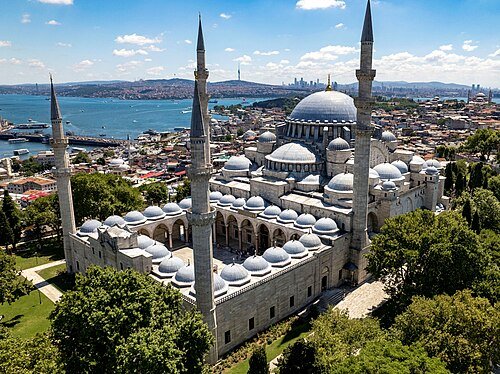
Süleymaniye Mosque crowns the Third Hill of Istanbul. Built for Sultan Suleiman the Magnificent by the architect Mimar Sinan, it was inaugurated in 1557.
Built 1557
Mosque
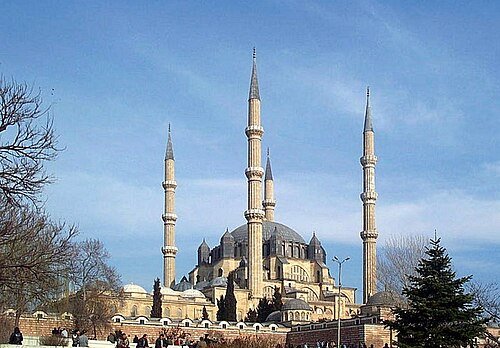
Selimiye Mosque in Edirne was built by Mimar Sinan for Sultan Selim II between 1568 and 1575. Sinan considered it his masterpiece, and it is a UNESCO World Heritage Site.
Built 1575
Photo: Nevit Dilmen, CC BY-SA 3.0 · Wikipedia
Shrine
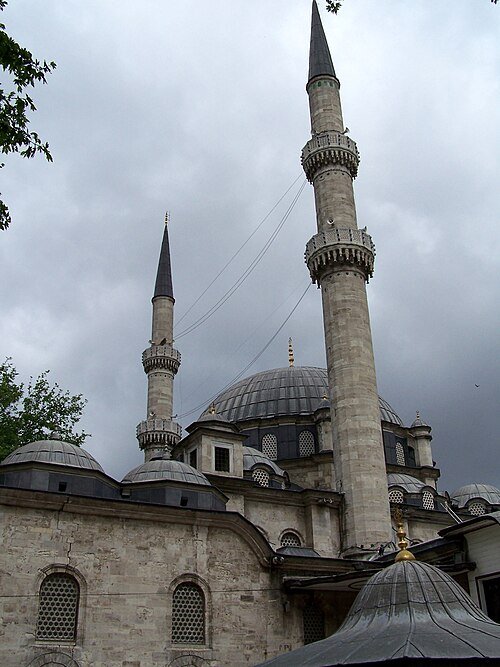
Eyüp Sultan Mosque in Istanbul marks the burial place of Abu Ayyub al-Ansari, a companion of the Prophet ﷺ. The present building dates from the early 19th century.
Photo: User:Darwinek, CC BY-SA 3.0 · Wikipedia
Mosque
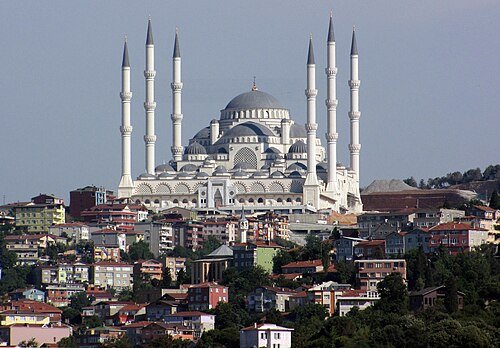
The Grand Çamlıca Mosque opened in 2019 on Çamlıca Hill in Istanbul. It can hold up to 63,000 worshippers and can be seen from much of the city.
Built 2019Capacity 63,000 worshippers
Photo: Håkan Henriksson (Narking), CC BY-SA 4.0 · Wikipedia
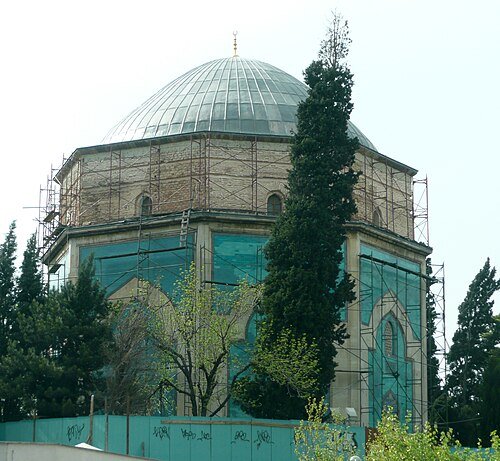
Historic site
The Green Mosque in Bursa was built for Sultan Mehmed I in the early 15th century. Its name comes from the green and blue tiles that cover its interior.
Photo: Brücke-Osteuropa, Public domain · Wikipedia
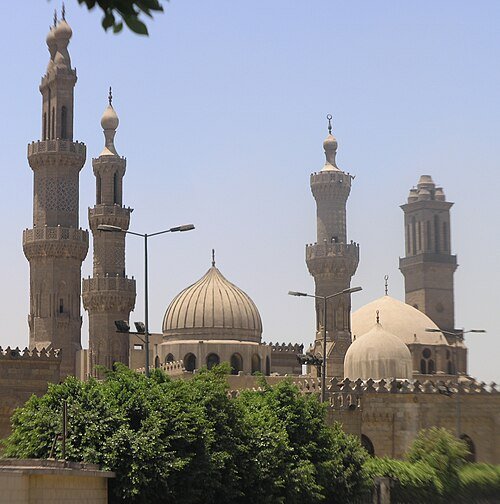
Mosque
Al-Azhar Mosque in Cairo was founded by the Fatimids in 970 CE. It became one of the oldest centres of Islamic learning in the world.
Built 972
Photo: Daniel Mayer, CC BY-SA 4.0 · Wikipedia
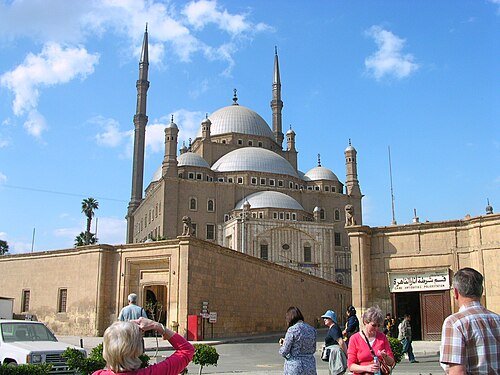
Mosque
The Mosque of Muhammad Ali stands in the Citadel of Cairo. Built between 1832 and 1857 in Ottoman style, it is one of the most visible landmarks on the city’s skyline.
Built 1857
Photo: Charlesdrakew at English Wikipedia, Public domain · Wikipedia
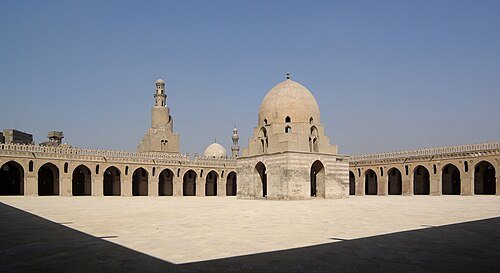
Historic site
The Mosque of Ibn Tulun in Cairo was built between 876 and 879 CE. It is the oldest well-preserved mosque in Egypt.
Built 879
Photo: User:Berthold Werner, CC BY 3.0 · Wikipedia
Historic site
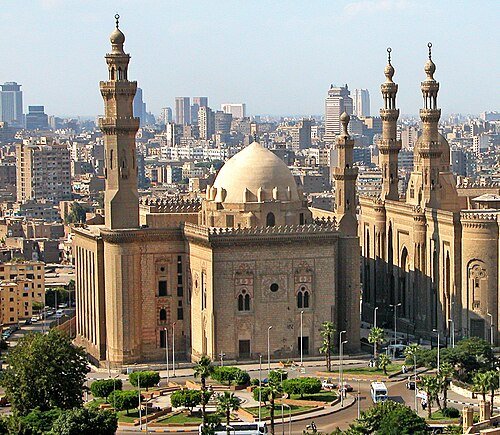
The Mosque-Madrasa of Sultan Hasan in Cairo was built between 1356 and 1363, in the Mamluk period. Its massive size makes it one of the most impressive historic monuments of the city.
Built 1363
Photo: Dennis G. Jarvis, CC BY-SA 2.0 · Wikipedia
Historic site
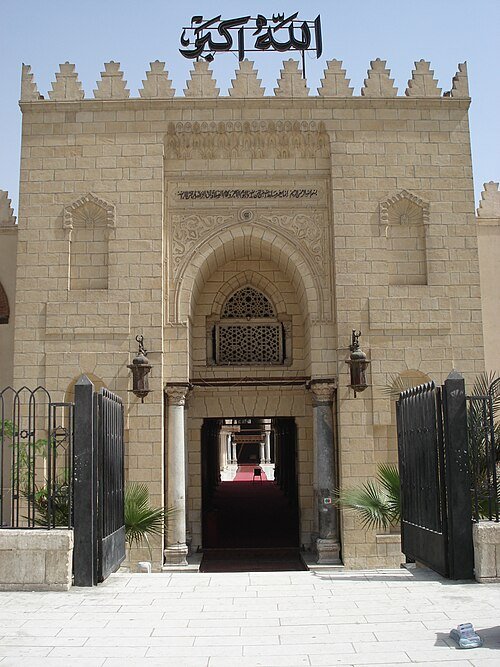
The Mosque of Amr ibn al-As in Old Cairo was first built around 642 CE. It was the first mosque in Egypt and one of the first in Africa.

Shrine
Al-Hussein Mosque in Cairo stands beside Al-Azhar and the Khan el-Khalili bazaar. It is one of the most revered Islamic sites in Egypt, linked to Imam Husayn ibn Ali.
Photo: Berthold Werner, CC BY 3.0 · Wikipedia
Mosque
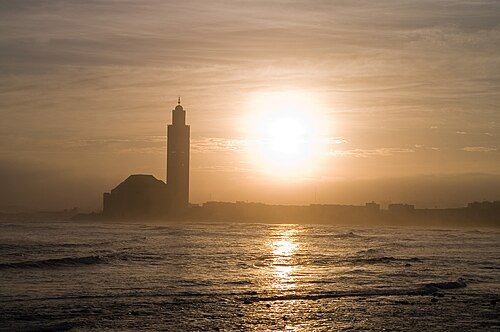
Hassan II Mosque in Casablanca was completed in 1993 on the Atlantic shore. Its minaret is 210 metres tall, one of the tallest in the world.
Built 1993
Photo: Milamber's portfolio, CC BY 2.0 · Wikipedia

Historic site
Al-Qarawiyyin in Fez was founded as a mosque by Fatima al-Fihri in 857 to 859. It became a leading centre of learning of the Islamic Golden Age and is still a university today.
Built 859
Photo: Abdel Hassouni, CC BY-SA 4.0 · Wikipedia
Mosque
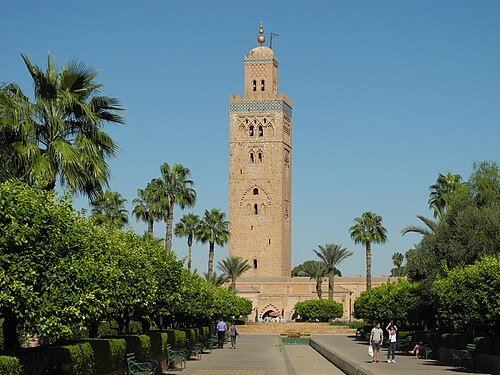
The Koutoubia Mosque is the largest mosque in Marrakesh, close to Jemaa el-Fnaa square. Its 12th-century minaret is the symbol of the city.

Historic site
The Great Mosque of Kairouan, also called the Mosque of Uqba, is one of the largest Islamic monuments in North Africa. Kairouan is a UNESCO World Heritage town.
Built 670
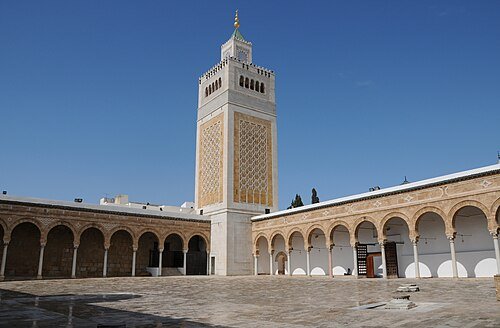
Historic site
Al-Zaytuna is the oldest mosque in Tunis, at the heart of the medina. Founded around the end of the 7th century, it was rebuilt in the 9th century with columns from ancient Carthage.
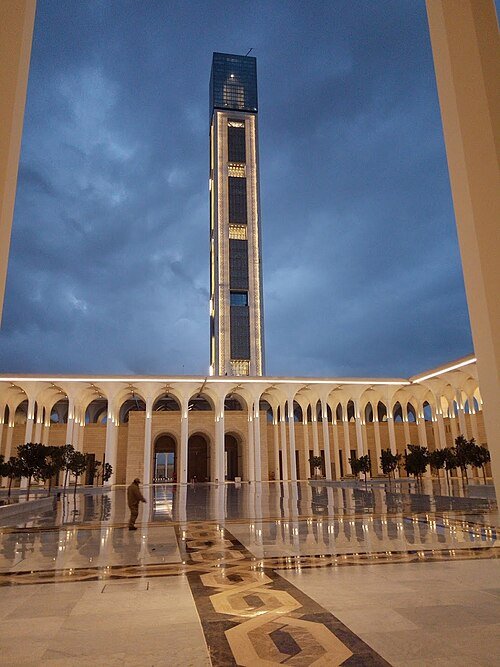
Mosque
Djamaa el Djazaïr, the Great Mosque of Algiers, opened in 2019. It has the tallest minaret in the world, 265 metres, and is the third-largest mosque in the world.
Built 2019
Photo: Askelaadden, CC BY-SA 4.0 · Wikipedia

Historic site
The Great Mosque of Djenné in Mali is the largest mud-brick building in the world. The present mosque dates from 1907, on a site where a mosque has stood since around the 13th century.
Built 1907
Photo: Andy Gilham, CC BY-SA 3.0 · Wikipedia

Mosque
The Great Mosque of Touba in Senegal was founded by Sheikh Ahmadou Bamba and completed in 1963. He is buried inside, and the city fills with pilgrims for the yearly Grand Magal.
Built 1963Capacity 7,000 worshippers
Photo: John Crane from Prague, Czech Republic, CC BY 2.0 · Wikipedia
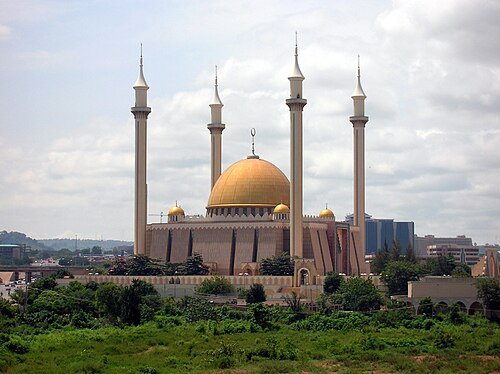
Mosque
The Abuja National Mosque is the national mosque of Nigeria. Built in 1984, it is open to non-Muslim visitors except during prayers.
Built 1984
Photo: Shiraz Chakera, CC BY-SA 2.0 · Wikipedia
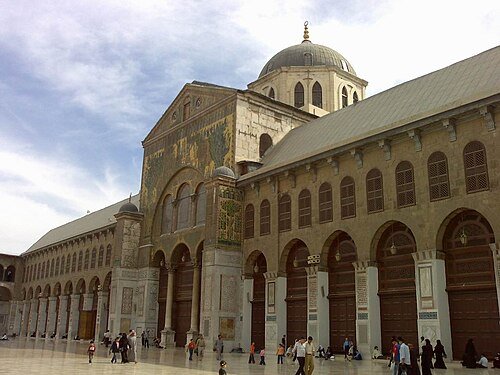
Historic site
The Umayyad Mosque in the old city of Damascus is one of the largest and oldest mosques in the world. Muslim and Christian tradition hold that the head of the Prophet Yahya (John the Baptist) is buried here.
Built 715
Photo: Unknown author, Public domain · Wikipedia

Shrine
The Imam Husayn Shrine in Karbala holds the tomb of Husayn ibn Ali, grandson of the Prophet ﷺ, martyred at the Battle of Karbala in 680 CE. Millions of pilgrims come, above all for Ashura and Arbaeen.
Photo: User:HerbertReichart germany, Public domain · Wikipedia

Shrine
The Imam Ali Shrine in Najaf holds the tomb of Ali ibn Abi Talib, cousin and son-in-law of the Prophet ﷺ and the fourth caliph. It is one of the holiest sites in Shia Islam.
Photo: U.S. Navy photo by Photographer's Mate 1st Class Arlo K. Abrahamson., Public domain · Wikipedia

Shrine
The Al-Abbas Shrine in Karbala holds the tomb of Abbas ibn Ali, Imam Husayn’s half-brother and standard-bearer at the Battle of Karbala. It stands close to the Imam Husayn Shrine.
Photo: Sameralhusseini1987, CC BY-SA 4.0 · Wikipedia
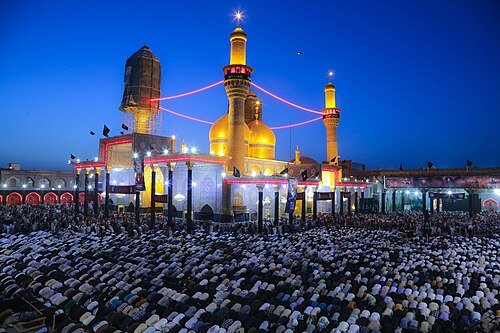
Shrine
Al-Kadhimiya Shrine in Baghdad holds the tombs of Imam Musa al-Kazim and his grandson Imam Muhammad al-Jawad. It is a major place of pilgrimage in Shia Islam.
Photo: Taisir Mahdi, CC BY-SA 4.0 · Wikipedia
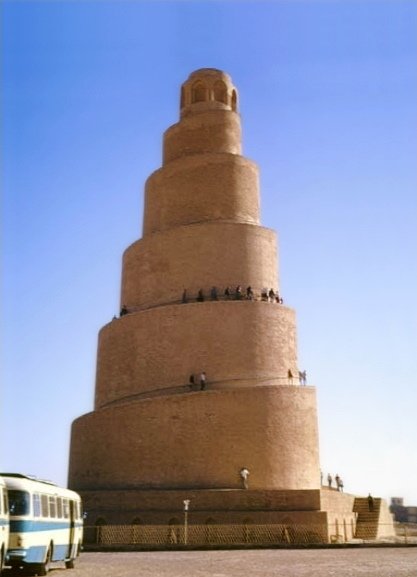
Historic site
The Great Mosque of Samarra was completed in 851 CE and was then the largest mosque in the world. Its 52-metre spiral minaret, the Malwiya, is famous around the world.
Built 851
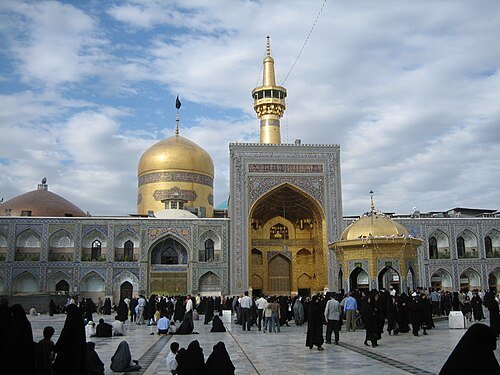
Shrine
The Imam Reza Shrine in Mashhad holds the tomb of Ali al-Rida, the eighth Imam. Nearly 30 million pilgrims visit each year, making it one of the most visited sites in the Muslim world.
Photo: Iahsan at English Wikipedia, CC BY-SA 3.0 · Wikipedia
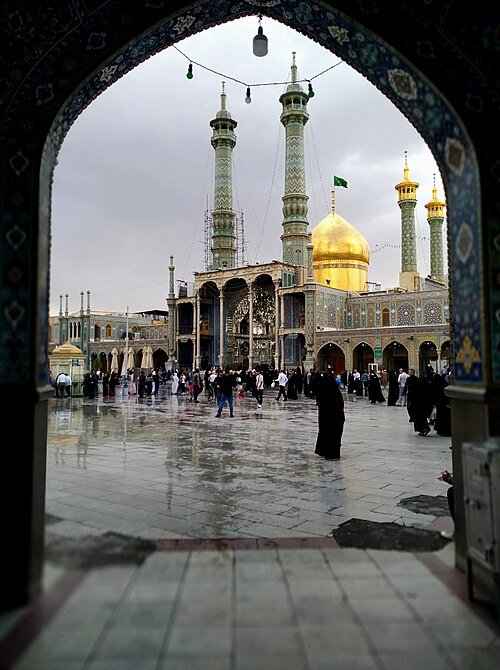
Shrine
The Fatima Masumeh Shrine in Qom holds the tomb of Fatima bint Musa, sister of Imam Reza. Qom is the largest centre of Shia Islamic scholarship in the world.
Photo: Mahdi Fathi Arjmand, CC BY-SA 4.0 · Wikipedia
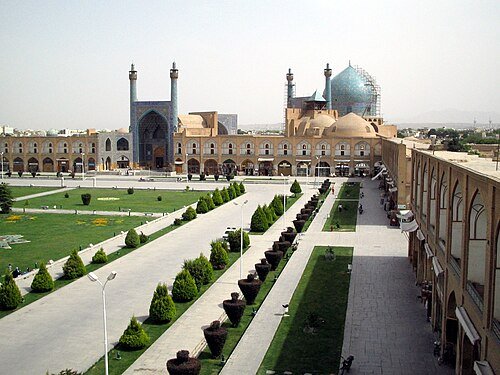
Historic site
The Shah Mosque, also called the Imam Mosque, stands on Naqsh-e Jahan Square in Isfahan. Built from 1611 to about 1630 under Shah Abbas, it is famous for its blue tilework.
Built 1630
Photo: Unknown author, CC BY-SA 2.5 · Wikipedia
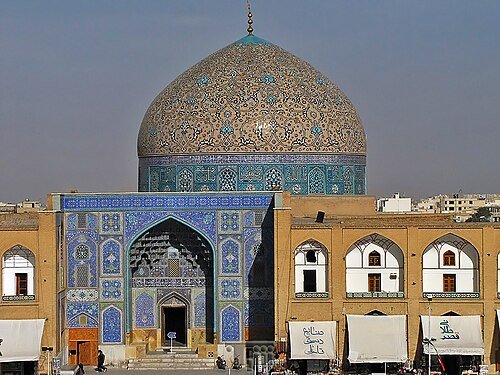
Historic site
Sheikh Lotfollah Mosque on Naqsh-e Jahan Square in Isfahan was built from 1603 to 1619. It is a masterpiece of Safavid architecture, known for its tiled dome.
Built 1619
Photo: شهاب الدین علیشاهی, CC BY-SA 4.0 · Wikipedia
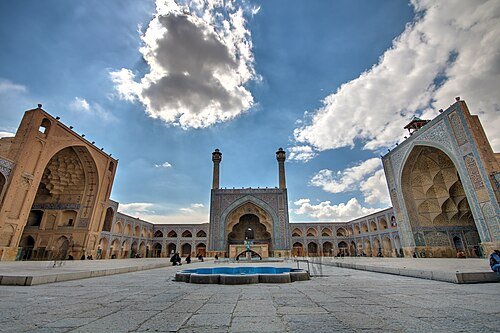
Historic site
The Jameh (Friday) Mosque of Isfahan has been built and rebuilt since the 8th century. It is one of the oldest congregational mosques in Iran and a UNESCO World Heritage Site.
Photo: Hamidespanani, CC BY-SA 4.0 · Wikipedia
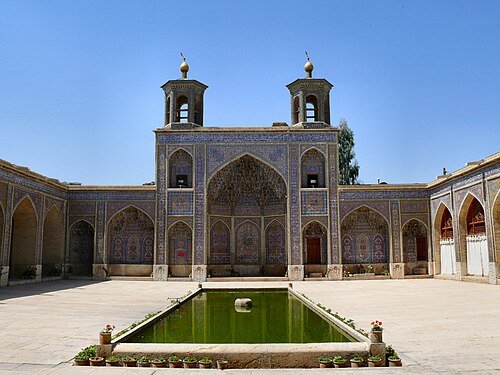
Historic site
The Nasir al-Mulk Mosque in Shiraz, known as the Pink Mosque, was completed in 1888. Morning sun through its stained-glass windows fills the prayer hall with colour.
Built 1888
Photo: dynamosquito, CC BY-SA 2.0 · Wikipedia
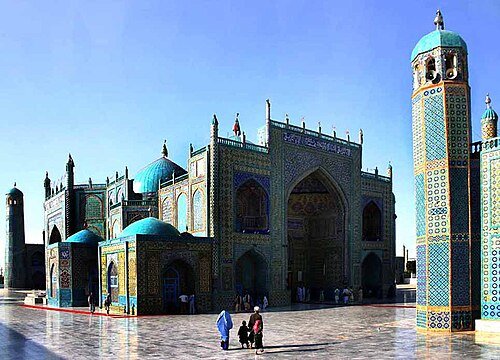
Shrine
The Blue Mosque of Mazar-i-Sharif, also called the Shrine of Ali, is the best-known landmark of northern Afghanistan. Its blue-tiled domes and courtyard draw visitors all year.
Prayer times in Mazar-i-Sharif
Photo: Steve Evans from Bangalore, India, CC BY 2.0 · Wikipedia

Mosque
Faisal Mosque in Islamabad is the national mosque of Pakistan, set against the Margalla Hills. Completed in 1986 and named after King Faisal of Saudi Arabia, its tent-like design is by the Turkish architect Vedat Dalokay.
Built 1986Capacity 300,000 worshippers
Photo: Ali Mujtaba, CC BY-SA 4.0 · Wikipedia
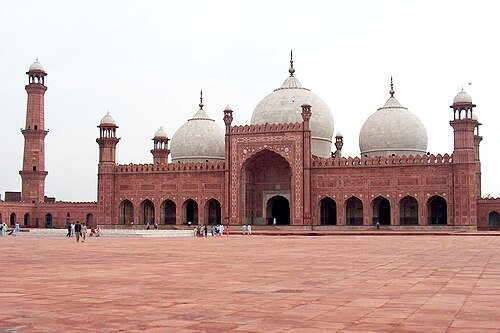
Historic site
The Badshahi Mosque in Lahore was built by the Mughal emperor Aurangzeb from 1671 to 1673, facing the Lahore Fort. It is one of the best-known landmarks of Pakistan.
Built 1673Capacity 100,000 worshippers
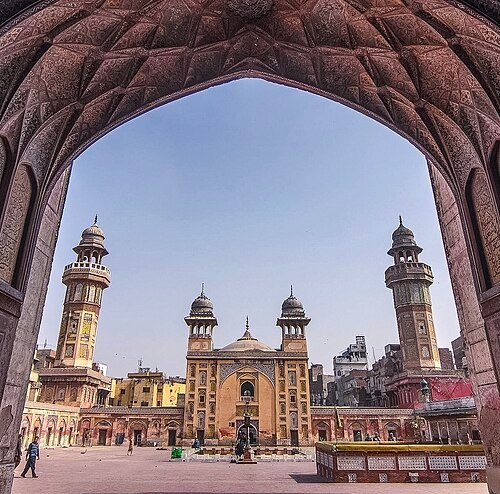
Historic site
Wazir Khan Mosque in the Walled City of Lahore was completed in 1641, under Shah Jahan. It is known for its richly decorated tilework and frescoes.
Built 1641
Photo: Shahbaz Aslam, CC BY-SA 4.0 · Wikipedia
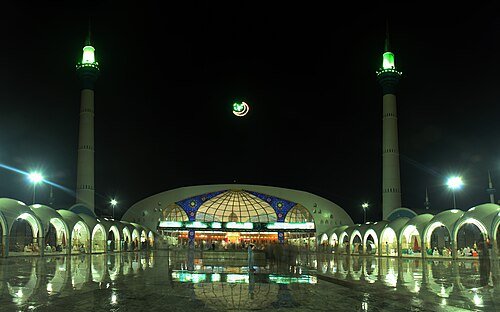
Shrine
Data Darbar in Lahore is the shrine of the 11th-century Sufi saint Ali al-Hujwiri, known as Data Ganj Bakhsh. It is the largest Sufi shrine in South Asia.
Historic site
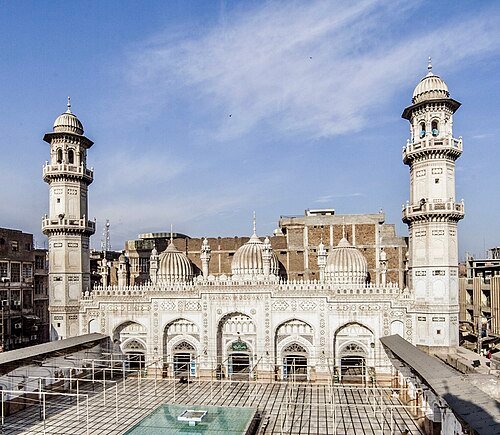
Mohabbat Khan Mosque is a Mughal mosque in Peshawar, built in 1630. Its white marble façade is one of the best-known sights of the city.
Built 1630
Photo: US Embassy Pakistan, Public domain · Wikipedia
Historic site
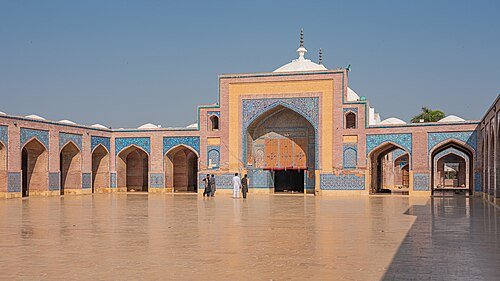
Shah Jahan Mosque, the Friday mosque of Thatta in Sindh, was built in the 17th century. It is said to have the most elaborate tilework in South Asia.
Built 1659
Mosque
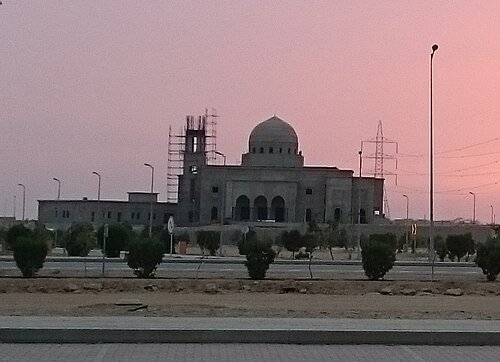
The Grand Jamia Mosque in Bahria Town, Karachi, is the largest mosque in Pakistan by capacity. Its design draws on the great Mughal mosques.
Photo: Ashrafabdulqadir, CC BY-SA 4.0 · Wikipedia
Historic site
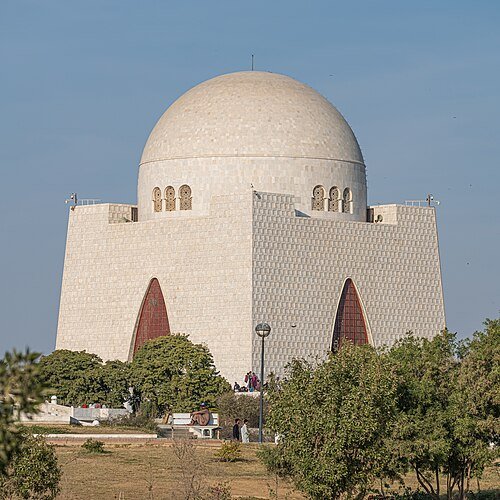
Mazar-e-Quaid in Karachi is the resting place of Muhammad Ali Jinnah, the founder of Pakistan. Completed in 1971, its white marble dome is a symbol of the city.
Built 1971
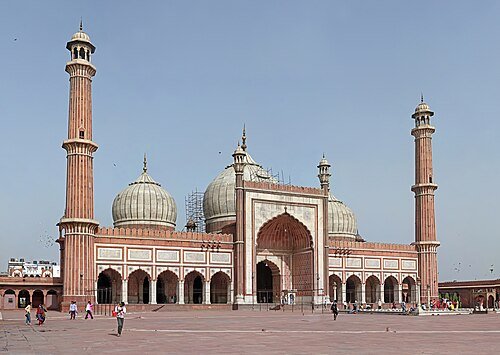
Historic site
Jama Masjid in Old Delhi was built by the Mughal emperor Shah Jahan between 1644 and 1656. It is one of the largest mosques in India.
Built 1656Capacity 25,000 worshippers
Photo: Muhammad Mahdi Karim, GFDL 1.2 · Wikipedia
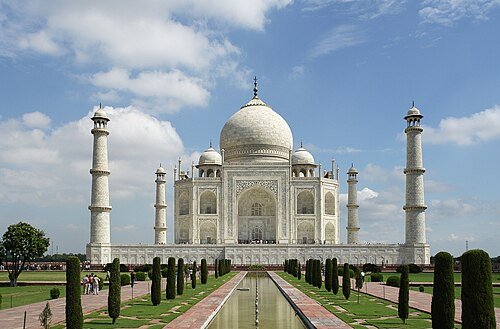
Historic site
The Taj Mahal in Agra is a white marble mausoleum commissioned in 1631 by Shah Jahan for his wife Mumtaz Mahal. Its complex includes a mosque, and it is one of the most famous buildings in the world.
Photo: Yann; edited by Jim Carter, CC BY-SA 4.0 · Wikipedia
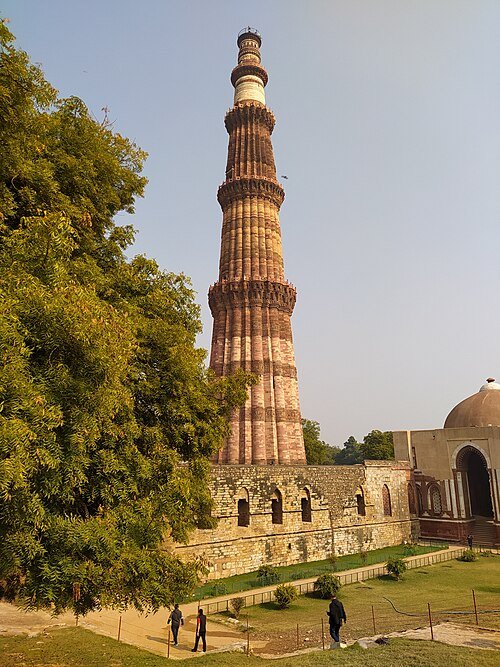
Historic site
Qutub Minar in Delhi is a minaret and victory tower built mostly between 1199 and 1220, under the Delhi Sultanate. It has 399 steps and is part of a UNESCO World Heritage Site.

Mosque
Makkah Masjid is the largest mosque in Hyderabad and one of the largest in India, near the Charminar. It was completed in 1694 under the Mughal emperor Aurangzeb.
Built 1694Capacity 10,000 worshippers
Photo: Suraj Garg, CC BY-SA 3.0 · Wikipedia

Historic site
The Charminar, built in 1591, is the symbol of Hyderabad. A mosque on its top floor has been in use for more than 400 years.
Built 1591
Photo: Gopikrishna Narla, CC BY-SA 3.0 · Wikipedia
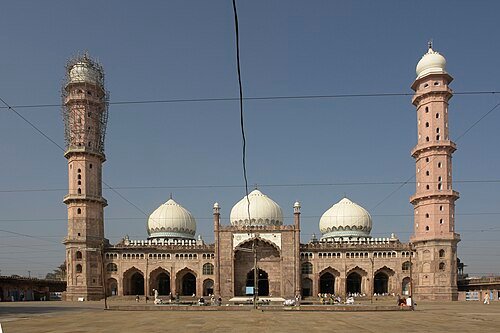
Mosque
Taj-ul-Masajid in Bhopal, with room for about 26,000 worshippers, is the largest mosque in India.
Capacity 26,000 worshippers
Photo: Yann (talk), CC BY-SA 4.0 · Wikipedia
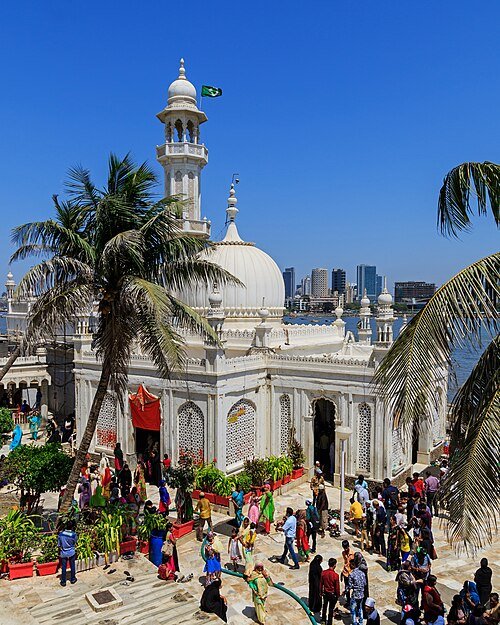
Shrine
Haji Ali Dargah is a Sufi shrine on an islet off Worli in Mumbai. It is the resting place of Pir Haji Ali Shah Bukhari.
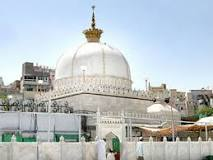
Shrine
Ajmer Sharif Dargah in Rajasthan is the shrine of the Sufi saint Moinuddin Chishti. It is one of the most visited shrines in South Asia, drawing up to 20,000 pilgrims a day.
Photo: Irshadchemical, CC BY-SA 4.0 · Wikipedia
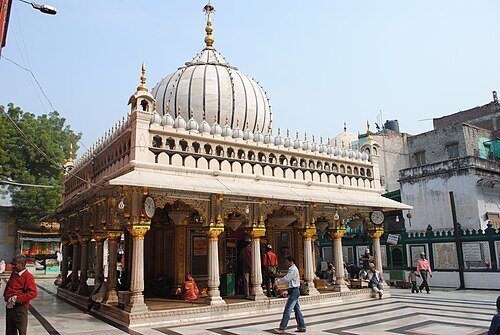
Shrine
Nizamuddin Dargah in Delhi is the shrine of the Sufi saint Nizamuddin Auliya. Thousands visit every week, and it is known for its evening qawwali.
Photo: Farzan Kermaninejad (بحث), Public domain · Wikipedia
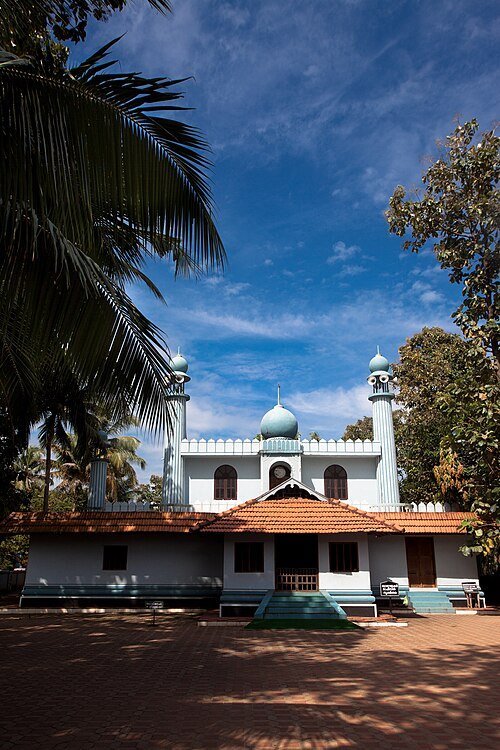
Historic site
Cheraman Juma Mosque in Kodungallur, Kerala, is traditionally dated to 629 CE. It is often called the first mosque in India, although some historians suggest a later date.
Photo: Shahinmusthafa, CC BY-SA 3.0 · Wikipedia
Mosque
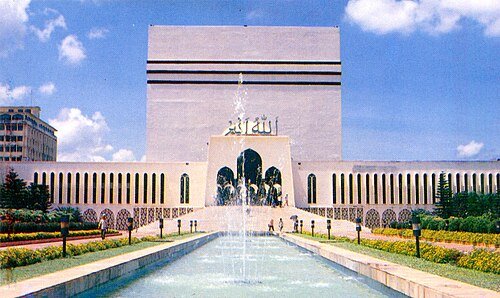
Baitul Mukarram in Dhaka is the national mosque of Bangladesh, completed in 1968. It can hold more than 40,000 worshippers.
Built 1968Capacity 40,000 worshippers
Photo: আহসান হাবীব, CC BY-SA 3.0 · Wikipedia
Historic site
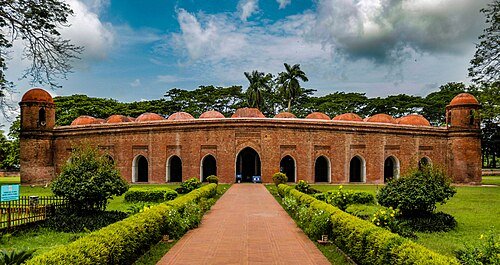
The Sixty Dome Mosque (Shait Gumbad) in Bagerhat was built by Khan Jahan Ali in the time of the Bengal Sultanate. It is the largest mosque of that period in Bangladesh and a UNESCO World Heritage Site.
Photo: মোয়ায মাহমুদ, CC BY-SA 4.0 · Wikipedia
Historic site
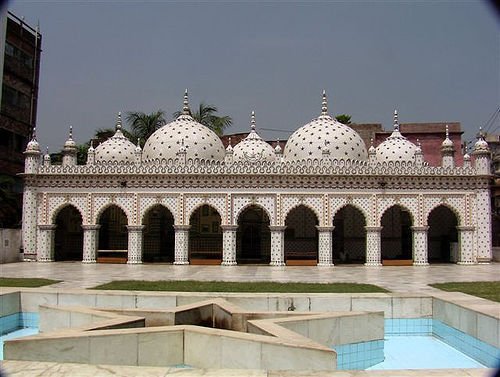
The Star Mosque (Tara Masjid) in Old Dhaka is decorated with blue star motifs. Built in the first half of the 19th century, it appears on the Bangladeshi 100 taka note.
Photo: Ishtiaque Ayub Zico., CC BY-SA 2.5 · Wikipedia
Historic site
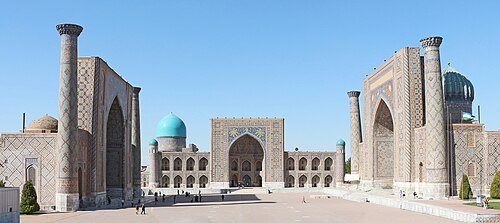
The Registan is the historic heart of Samarkand. Its three madrasas, Ulugh Beg, Sher-Dor and Tilya-Kori, are among the finest works of Islamic architecture in Central Asia.
Photo: Bernard Gagnon, CC0 · Wikipedia
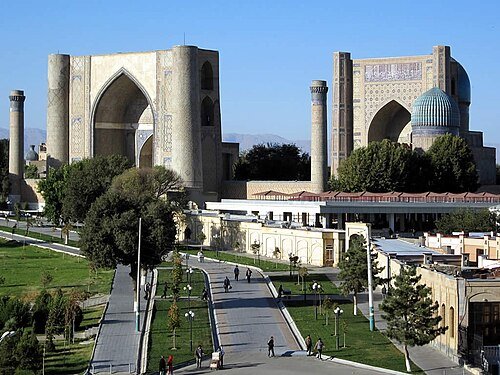
Historic site
Bibi-Khanym Mosque in Samarkand was one of the largest mosques in the Islamic world in the 15th century. It is a masterpiece of Timurid architecture, largely restored in modern times.
Built 1404
Photo: David Stanley from Nanaimo, Canada, CC BY 2.0 · Wikipedia
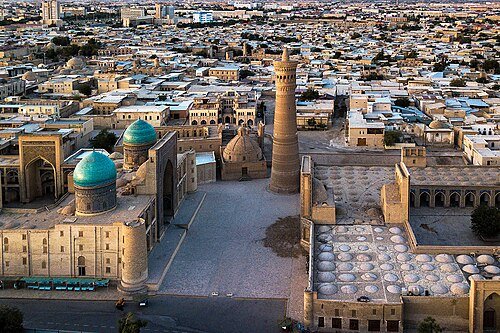
Historic site
Po-i-Kalan in Bukhara brings together the Kalan Mosque, the Kalan Minaret and the Mir-i-Arab Madrasa. The minaret has stood since the 12th century.
Photo: Официальный веб-сайт Агентства культурного наследия Республики Узбекистан, CC BY 4.0 · Wikipedia
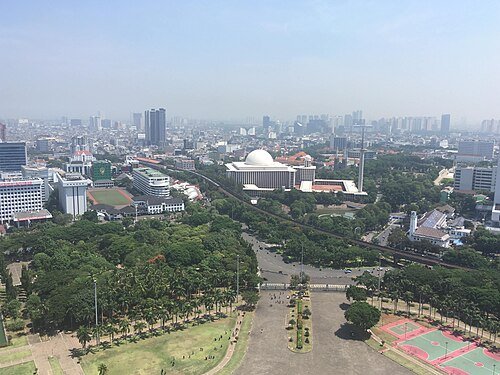
Mosque
Istiqlal Mosque in Jakarta is the national mosque of Indonesia and the largest mosque in Southeast Asia. Its name means independence, and it opened in 1978.
Built 1978Capacity 120,000 worshippers
Photo: Christophe95, CC BY-SA 4.0 · Wikipedia
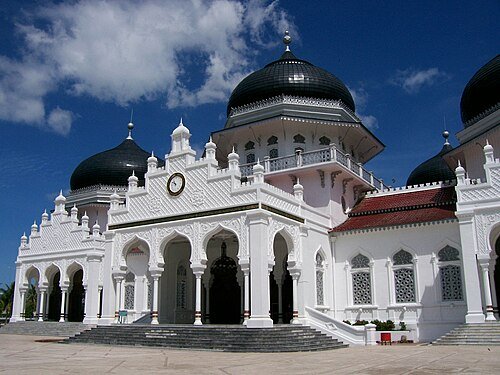
Mosque
Baiturrahman Grand Mosque in Banda Aceh is a symbol of the faith and history of Aceh. It survived the 2004 Indian Ocean tsunami.
Capacity 30,000 worshippers
Photo: Si Gam Acèh, CC BY-SA 3.0 · Wikipedia
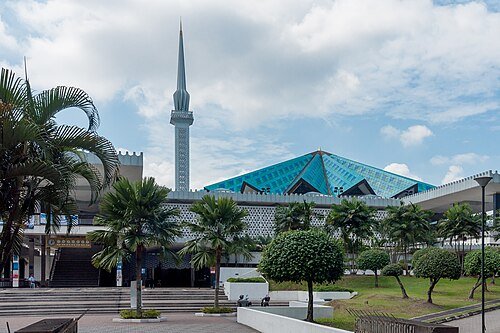
Mosque
The National Mosque of Malaysia (Masjid Negara) in Kuala Lumpur opened in 1965. Its roof is shaped like an open umbrella, beside a 73-metre minaret.
Built 1965Capacity 15,000 worshippers
Photo: CEphoto, Uwe Aranas, CC BY-SA 3.0 · Wikipedia
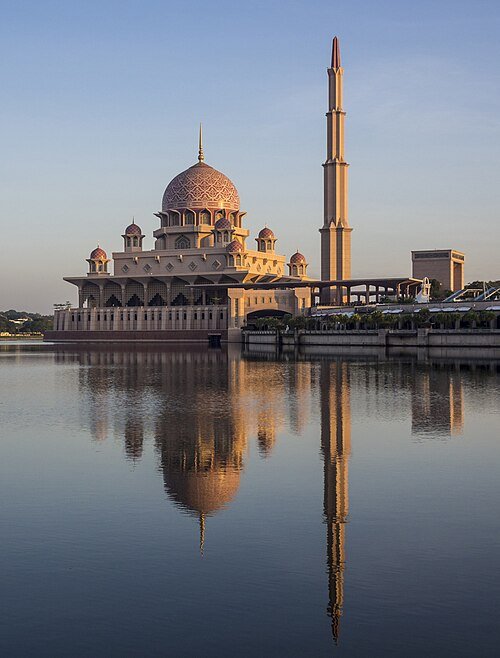
Mosque
Putra Mosque is the main mosque of Putrajaya, Malaysia, built from 1997 to 1999. Its rose-coloured dome stands beside Putrajaya Lake.
Built 1999Capacity 15,000 worshippers
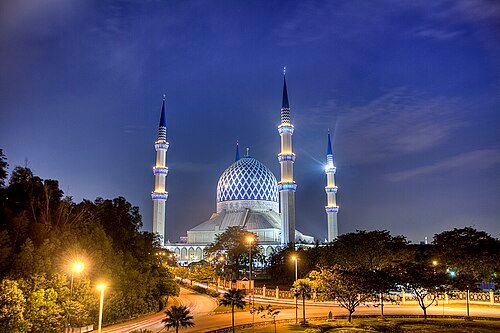
Mosque
Sultan Salahuddin Abdul Aziz Mosque in Shah Alam is the largest mosque in Malaysia. Its great blue and silver dome is its best-known feature.
Built 1988Capacity 24,000 worshippers
Photo: Ezry Abdul Rahman from Petaling Jaya, Selangor, Malaysia, CC BY 2.0 · Wikipedia
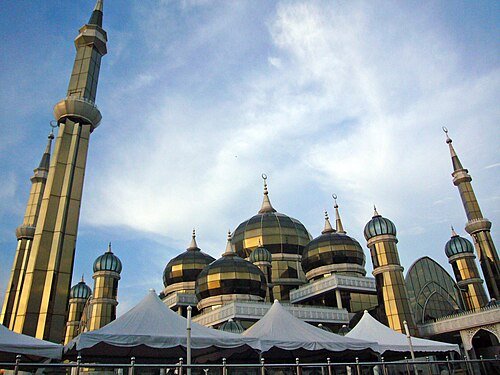
Mosque
The Crystal Mosque in Kuala Terengganu is built of steel, glass and crystal. It opened in 2008 on Wan Man island.
Built 2008
Prayer times in Kuala Terengganu
Photo: Ikhwan Salleh, CC BY-SA 4.0 · Wikipedia
Mosque
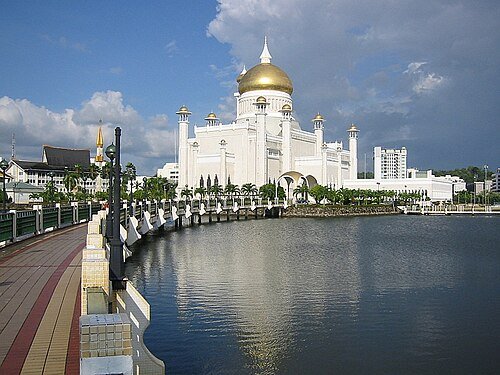
Omar Ali Saifuddien Mosque in Bandar Seri Begawan, Brunei, was completed in 1958. Its golden dome rises above a lagoon.
Built 1958
Prayer times in Bandar Seri Begawan
Photo: Daniel Weiss, CC BY-SA 3.0 · Wikipedia
Historic site
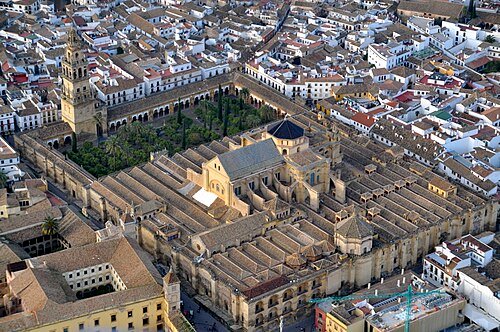
The Great Mosque of Córdoba was begun in the 8th century under the Umayyads of al-Andalus. Its forest of red and white arches is one of the great works of Islamic architecture; today it is the city’s cathedral.
Photo: Toni Castillo Quero, CC BY-SA 2.0 · Wikipedia
Historic site
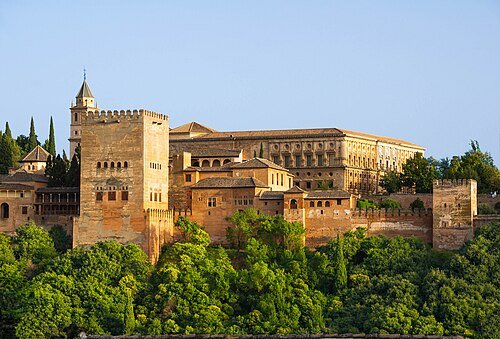
The Alhambra in Granada is a palace and fortress of the Muslim rulers of al-Andalus. It is the only well-preserved palace of the medieval Islamic world.
Historic site
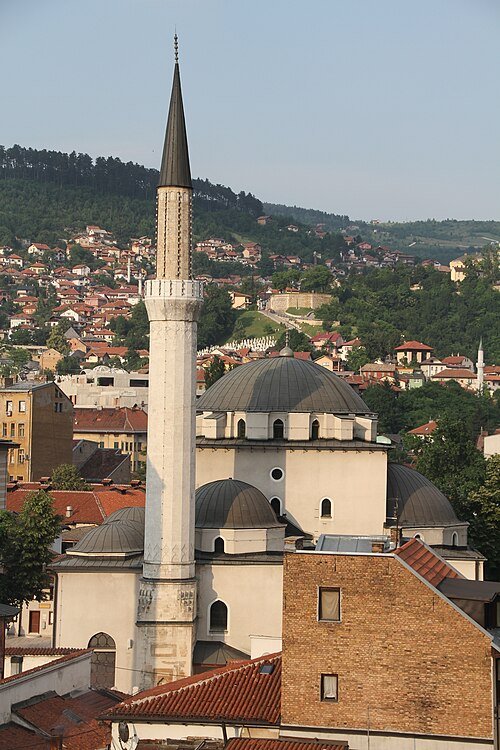
Gazi Husrev-beg Mosque in Sarajevo was built in 1531. It is the largest historic mosque in Bosnia and Herzegovina and a landmark of Ottoman architecture in the Balkans.
Built 1531
Photo: Bjoertvedt, CC BY-SA 3.0 · Wikipedia
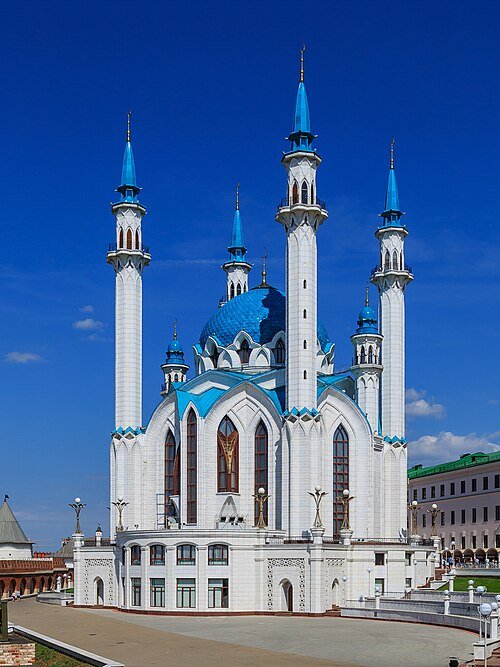
Mosque
Kul Sharif Mosque stands inside the Kazan Kremlin in Tatarstan. Opened in 2005, it is one of the largest mosques in Russia.
Built 2005Capacity 6,000 worshippers
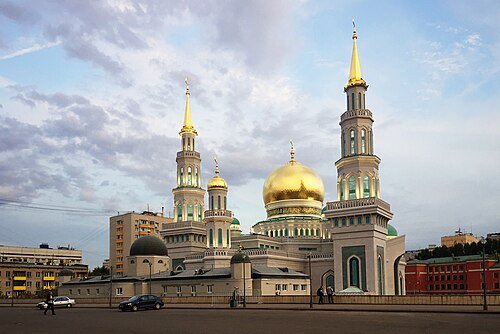
Mosque
Moscow Cathedral Mosque is the main mosque of Moscow, rebuilt and reopened in 2015. It can hold about 10,000 worshippers.
Built 2015Capacity 10,000 worshippers
Photo: Gennady Grachev from Moscow, Russia, CC BY 2.0 · Wikipedia
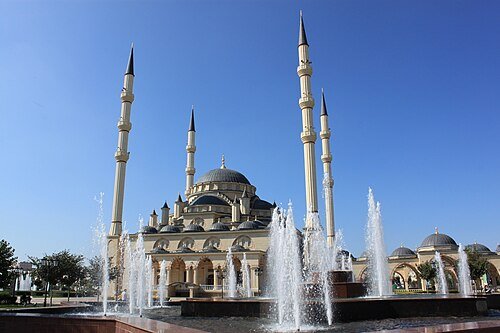
Mosque
The Akhmad Kadyrov Mosque in Grozny, known as the Heart of Chechnya, opened in 2008. It is one of the largest mosques in Russia.
Built 2008
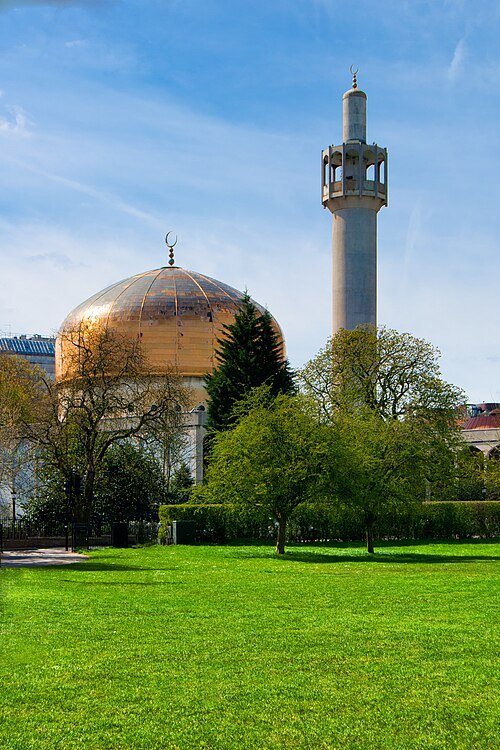
Mosque
London Central Mosque stands on the edge of Regent’s Park. Completed in 1977, its golden dome is a well-known London landmark.
Built 1977
Photo: Asim Saleem (Asim18), CC BY 3.0 · Wikipedia

Mosque
The Grand Mosque of Paris, completed in 1926, is one of the largest mosques in France. Its garden, library and tea room are open to visitors.
Built 1926

Mosque
The Islamic Center of Washington stands on Embassy Row in Washington, D.C. When it opened in 1957, it was the largest mosque in the Western Hemisphere.
Built 1957
Photo: AgnosticPreachersKid, CC BY-SA 3.0 · Wikipedia